
WARNER BROTHERS

HISTORY
1903-25: Rin Tin Tin and the founding of Warner Brothers
The four founding, Harry, Albert, Sam and Jack entered a fledgling business when they acquired a movie projector showing “Flickers” in the mining towns of Pennsylvania and Ohio, opening their first theater “The Cascade Theater” in New Castle Pennsylvania in 1903.
5 years later they started distributing films to several different theaters. And by the start of World War 1 they started producing films; in 1918 they opened their first studio, Warner Brother’s studio, in Sunset Blvd California. They released their first nationally syndicated film “My Four Years in Germany.” And on April 4, 1983 they formally incorporated as Warner Brother Pictures, Inc.
The first important deal for the company was the acquisition of the rights to the 1919 Broadway play “The gold diggers” by David Belasco. However, what really put Warner Bros on the Hollywood map was canine legend “Rin Tin Tin.” The German shepherd brought from France after World War 1 by an American soldier. Rin Tin Tin debuted in the feature film “Where the north begins” in 1923. The movie was a success and Jack Warner agreed to sign the dog to star in more film for a whopping $1000 per week.
Warner Brothers were lacking star power even after Rin Tin Tin. So when Sam & Jack offered Broadway actor John Barrymore the lead role in 1924’s “Beau Brummel.” The film was a success resulting in a generous long term contract for Barrymore. By the end of 1924, arguably Warner Brothers was the most successful independent studio in Hollywood, competing with the “The Big Three” (at that time) studios: First National, Paramount Pictures, and MGM.
1925-35: “Talkies” era and “Colour” film era
In the early days of cinema there was no sound in a film, music was played in the background and dialogues were written on the screen instead of someone speaking them. They are now referred as “Silent Films.” The Warner Brothers had an idea of adding synchronized sound. Initially Harry opposed this idea, stating: “Who the heck wants to hear actors talk?” Later on after suffering monetary loss, Harry agreed to use the synchronized sound. (as long as it was for background music only). “Don Juan” was made, as this was the first feature film with synchronized Vita-phone sound effects and a musical soundtrack. This encouraged the ground breaking “The Jazz Singer” starring Al Jolson. This revolutionized the industry and marked the beginning of “the talkies” era and was the end of silent films.
After the success Warner Brothers acquired land and built a large studio in Burbank.
During the Great Depression, Warner Brothers lifted audiences spirits with “On with the show” in 1929 the first all-colour all-talking film, the seconds all colour, all talking film “The gold diggers of Broadway” which was so popular that it was played in theaters until 1939. With the success of these colour films, the era of colour films entered the film making world.
1930: Birth of Warner Cartoons
Animation, this was another game changer for Warner Brothers. Animation roots of Warner Brothers were in the independent Harman and Ising studio. In 1931, the first “Looney Tunes” cartoon was produced. By the end of the decade a new production team was formed, consisting of Fritz Freleng, Tex Avery, Robert Clampett and Chuck Jones. They made fast paced, irreverent style that made cartoons immensely popular worldwide. In 1936, Porky Pig was introduced and it instantly became a star. Later on Daffy Duck debuted in 1937 in a short film “Porky’s Duck Hunt” and Bugs Bunny, debuted in 1940 “A Wild Hare” as Bugs Bunny became the star power on cartoons and still is the face of Warner Brother’s cartoons. And through these characters and films, Warner Brothers surpassed Walt Disney Studios as the most successful producer of animated shorts in the United States.
1931-1935: The “Gangster Studio”
With the popularity of musicals, Warner Brothers turned to more socially realistic story lines. With box office hits like “Little Ceasar” and “The public enemy” Warner brothers soon became known as the gangster studio. With “The public enemy” was launched, James Cagney, who became the new studio star.
In 1933, Harry Warner brought newspaper tycoon William Randolph Hearst’s Cosmopolitan films. As Hearst’s was struggling to get her mistress, Marion Davies, achieve box office success. As Warner Brothers had partnership with Hearst’s, they signed Davies from which they received funding and from that they built their biggest sound stage, Stage 16. Where blockbusters like; “Jurassic Park” and “The Perfect Storm” were shot.
Many of Warner Brothers great historical pictures were turned down such as “The perfect forest” due to trouble with censors. Jack Warner signed Humphrey Bogart to a studio contract but Harry Warner did not like him as he thought that Bogart was not star material, as he was casted in films as a villain.
As later on Hayes Code was enforced so the studio had to abandon the gangster genre and produced film that were more moralistic, more like idealized pictures.
World War II
Among its WWII films were, Now Voyager, Yankee Doodle Dandy (all 1942), and “Mission to Moscow” (1943). At the premiere of “Yankee Doodle Dandy”, audiences purchased $15.6 million in war bonds. To honor the studio’s contribution to the war effort, a Liberty Ship was named after the brothers’ father, Benjamin Warner. In 1944 Jack Warner signed newly released MGM actress Joan Crawford. Her first starring role at the studio was 1945’s Mildred Pierce, which revived her career and earned her an Oscar for Best Actress.
The record attendance figures of the World War II years made Warner Bros. extremely profitable. The gritty Warner image of the 1930’s gave way to a glossier look, especially in women’s pictures starring Davis and Crawford. The 1940’s also saw the rise of Bogart. In the post-war years, Warner Bros. continued to create new stars, like Lauren Bacall and Doris Day.
Changing Hands
In the early 1950’s, the threat of television had grown, but Warner Bros. rebounded by specializing in adaptations of popular plays like The Bad Seed (1956), “No Time for Sergeants” (1958), and Gypsy (1962). In 1962 Warner paid an unprecedented $5.5 million for the film rights to the Broadway musical My Fair Lady. With its success of these films and their accompanying soundtracks, Warner Bros. Records became a profitable subsidiary. Another Broadway play adaptation, “Who’s Afraid of Viriginia Woolf” (1966), won them five Oscars, including Best Actress for Elizabeth Taylor, and was a huge box office success.
In November 1966, Jack Warner gave in to advancing age and the changing times, selling control to Seven Arts Productions. Although movie audiences were shrinking, Warner Bros. still believed in the drawing power of stars, signing co-production deals with the biggest names of the day, among them Paul Newman, Robert Redford, Barbara Streisand and Clint Eastwood, carrying the studio through the 1970’s and 1980’s. DC Comics was also a subsidiary of Warner Bros. allowing them to build film franchises around popular comic book characters like Superman and Batman.
1995-Now
In 1995, Warner Bros. launched The WB Network, targeting the teen demographic. Their early programming, “Buffy the Vampire Slayer,” “Smallville,” “Dawson’s Creek” and “One Tree Hill”, helped bring The WB into the spotlight, along with popular animated children’s shows like “The Animaniacs”. In 2006, Warner Bros. and CBS joined forces and launched The CW Television Network.
Meanwhile in 2001, Warner Bros. began releasing the film adaptations of the “Harry Potter” novels that have become the highest grossing film series of all time. In 2009, Warner Bros. became the first studio in history to gross more than $2 billion domestically in a single year. The studio also leases its various lots to fellow studios, television networks and independent projects. Shows like HBO’s “True Blood” use its outdoor set, nicknamed “the jungle,” as the setting for Merlotte’s Bar. “Friends,” one of the most popular sitcoms of all time, called Warner Bros. home for 10 years.
PRODUCTION
Warner Brothers have spent a load lot of money on their films and they have also received a lot from those spending, as in the 2010’s decade they have 5 films that surpassed the 1 Billion Dollar mark.
- Harry Potter and the Deathly Hallows: Part II (2011) – $1,340,955,738
- Aquaman (2018) – $1,143,966,520
- The Dark Knight Rises (2012) – $1,082,228,107
- Joker (2019) – 1,072,556,671
- The Hobbit: An Unexpected Journey (2012) – $1,017,003,568
DISTRIBUTION
Film distribution is the process of making a movie available for viewing by an audience. This is normally the task of a professional film distributor, who would determine the marketing strategy for the film, the media by which a film is to be exhibited or made available for viewing, and who may set the release date and other matters. The film may be exhibited directly to the public either through a movie theater or television, or personal home viewing (including DVD, video on-demand, download, television programs through broadcast syndication). For commercial projects, film distribution is usually accompanied by film production.
Warner Brothers has several great professionals who are responsible for the films marketing as this is one of the very main aspects for making their film standout. As Warner Brothers have their cinema, known as Warner Village Cinemas with cinemas on various locations throughout Europe.
Warner Brothers use several different strategies for the distribution of their films;
- Synergize with several different companies in order to make and sell the product.
- Promoting content through channels they own such as: CNN, Cartoon Network and etc.
- Doing International Promotional Events, cast interacting with fans.
- Use of Cross Media Convergence, Trailer on YouTube and other online platforms.
EXAMPLE OF FILM
Warner Brothers massive hit The Dark Knight which is widely considered one of the greatest film ever made.
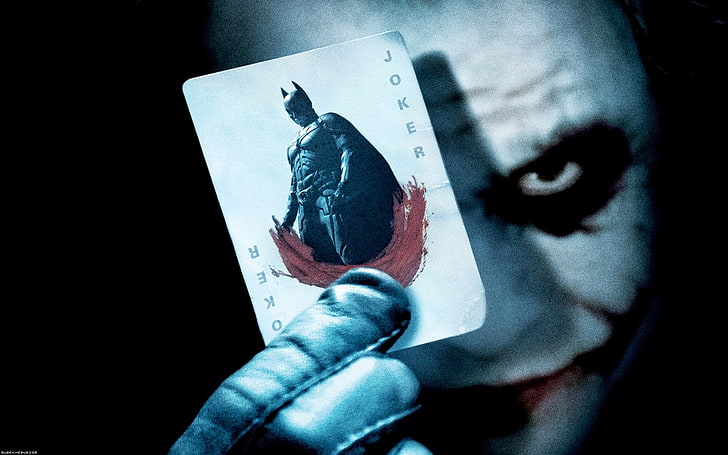
As this film earned 1,005 Billion dollars in the worldwide box office with a budget of 180 Million dollars, this shows the amount of distribution the Warner Brothers had planned for this film.
A follow up to the first film, Batman Begins, fans expectations were very high as the first film teaser was released which introduced the characters to the audience. As there was a tagline “I believe in Harvey Dent” was launched as a fictional political campaign. 42 Entertainment also established a “vandalized” version of “I Believe in Harvey Dent”, called “I believe in Harvey Dent too”, where e-mails sent by fans slowly removed pixels, revealing the first official image of the Joker; it was ultimately replaced with many “Haha”s and a hidden message that said “see you in December.” As this way the joker was teased to the audience and this made the hype increase as this was the first time since 1989 where Batman and his greatest villain of all time “The Joker” will share screen together. 11 million participants from 70 different countries engaged in it.
Later on Warner Brothers released the trailer of The Dark knight which showed more of the characters and their motivation. But there was one tragic thing that shocked the world, as the actor who played Joker, Heath Ledger, passed away in January of 2008. This was a very sad, as this way people went to watch the late great actor play his last role. He gave one of the greatest performances in the history of cinema. Warner Brothers also distributed the film around Heath Ledger.
Warner Brothers made posters for the film that were sold in order to market the film, there were merchandise (shirt) made for the film separately with the most famous one was with the tagline: “Why so serious.” There were key chains made which were sold worldwide. There was cologne made for men with the dark knight name on it.
A Toyota formula one car featured with a batman logo on it, at the 2008 British Grand Prix. Comic-Con event was held where fans wore different costumes of the characters in the film, they met with the stars of the film. There were several other promotional events around the world were the actors of the film interacted with the fans.
The Dark Knight received great critical score from the critics and high praises for the acting and direction, this made fans ambiguity to increase.
As in conclusion it can be added that Warner Brothers is on its way to go up straight and they aren’t looking back, as their latest film release “TENET” directed by: Christopher Nolan have hit the cinemas and this is the most awaited film of 2020.
PRE-PRODUCTION
Pre-production is a fairly loose term which refers to the tasks undertaken before production begins. … For feature films, pre-production is more specific and only begins when other milestones have been met such as financing, screenplay, casting and major staffing. In this case pre-production includes: Location scouting.
Warner Brothers get their finances very easily as they a have earned a lot of money after serving the film industry for 97 years. Warner Brothers also get sponsors very easily because they have a very good track record of film and they can easily gain sponsors. Also they have several other companies that they own.
COMPUTER GENERATED IMAGERY (CGI)
Computer-generated imagery is often used in conjunction with motion capture to better cover the faults that come with CGI and animation.
CGI is commonly used by Warner Brothers for their big block buster films such as Godzilla, Harry Potter and many more.
DISTRIBUTION
Film distribution is the process of making a movie available for viewing by an audience. This is normally the task of a professional film distributor, who would determine the marketing strategy for the film, the media by which a film is to be exhibited or made available for viewing, and who may set the release date and other matters. The film may be exhibited directly to the public either through a movie theater or television, or personal home viewing (including DVD, video on-demand, download, television programs through broadcast syndication). For commercial projects, film distribution is usually accompanied by film production.
Warner Brothers has several great professionals who are responsible for the films marketing as this is one of the very main aspects for making their film standout. As Warner Brothers have their cinema, known as Warner Village Cinemas with cinemas on various locations throughout Europe.
Warner Brothers use several different strategies for the distribution of their films;
- Synergize with several different companies in order to make and sell the product.
- Promoting content through channels they own such as: CNN, Cartoon Network and etc.
- Doing International Promotional Events, cast interacting with fans.
- Use of Cross Media Convergence, Trailer on YouTube and other online platforms.
EXAMPLE OF FILM
Godzilla: King of the Monsters
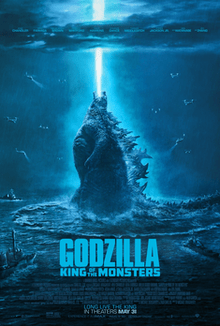
Godzilla: King of the Monsters grossed $110.5 million in the United States and Canada, and $276.1 million in other territories, for a worldwide total of $386.6 million
Worldwide, the film was initially projected to earn around $180 million from 75 other territories in its opening weekend, for a global total of $230–235 million. It was speculated that the amount could go higher if the film over-performed in China, where it was projected to debut to $75–90 million. The film held early previews in China on May 25, 2019, where it grossed $2.5 million.
Members of the crypto-zoological agency Monarch face off against a battery of god-sized monsters, including the mighty Godzilla, who collides with Mothra, Rodan, and his ultimate nemesis, the three-headed King Ghidorah. When these ancient super-species-thought to be mere myths-rise again, they all vie for supremacy, leaving humanity’s very existence hanging in the balance.
 Mustaneer Dar